

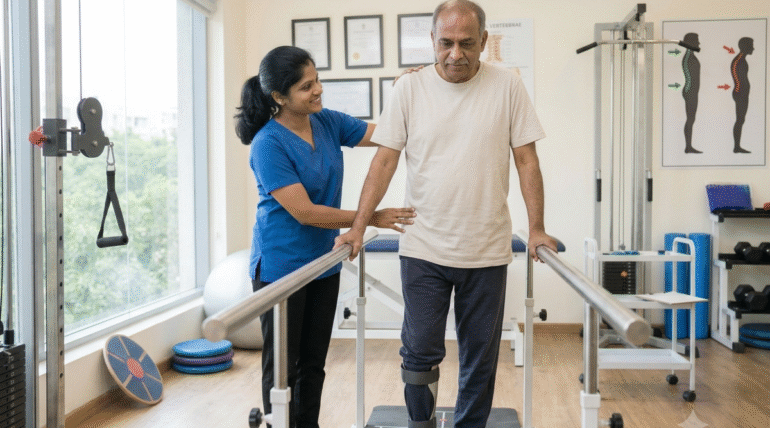
Post-Surgical Rehabilitation: Importance, Benefits, Exercises and Recovery
Recovering after surgery is an important journey that requires patience, proper care and the right rehabilitation approach. Whether someone has undergone knee replacement, hip replacement, ligament reconstruction, spine surgery or another orthopaedic procedure, regaining normal movement and strength can take time.
Post-surgical rehabilitation plays an essential role in helping patients recover physical function, improve mobility and gradually return to their daily activities. With professional physiotherapy guidance and a structured recovery programme, patients can work towards better movement, strength and independence.
At Alpine Physiotherapy, the focus is on personalised post-surgical rehabilitation programmes designed around each patient’s surgery, recovery stage, physical condition and medical recommendations.
What Is Post-Surgical Rehabilitation?
Post-surgical rehabilitation is a planned recovery process that uses physiotherapy and therapeutic exercises to help patients regain movement and physical function after an operation.
Surgery may correct an underlying problem, but the surrounding muscles and joints may need additional attention during recovery. Pain, swelling, stiffness, muscle weakness and reduced mobility can sometimes make everyday activities challenging.
Physiotherapy helps address these limitations through carefully selected exercises, movement training and functional rehabilitation.
The treatment plan depends on the type of surgery, healing progress and instructions provided by the treating surgeon.
Why Is Physiotherapy Important After Surgery?
After surgery, reduced physical activity and temporary movement restrictions can affect muscle strength, joint flexibility and overall mobility.
Post-operative physiotherapy helps patients work towards:
Improving joint movement and flexibility.
Regaining muscle strength after periods of reduced activity.
Managing stiffness and movement limitations.
Improving balance and coordination.
Developing confidence while walking and performing daily activities.
Supporting a safe and gradual return to normal routines.
Starting rehabilitation at the appropriate time can help reduce the impact of prolonged inactivity and support a more organised recovery process.
Common Surgeries That May Require Rehabilitation
Different surgical procedures require different rehabilitation approaches. Some common examples include:
1. Knee Replacement Surgery
After knee replacement surgery, patients may experience stiffness, swelling and weakness around the operated joint. Physiotherapy focuses on gradually improving knee movement, strengthening surrounding muscles and practising safe walking.
2. Hip Replacement Surgery
Hip replacement rehabilitation helps patients improve hip mobility, muscle strength and balance. Training may include walking practice, functional movements and exercises according to the surgeon’s precautions.
3. ACL Reconstruction Surgery
Following ACL reconstruction, rehabilitation focuses on restoring knee movement, rebuilding quadriceps and hamstring strength, improving balance and gradually preparing the patient for more demanding activities.
4. Spine Surgery
Patients recovering from spine surgery may require guidance to improve mobility, posture and functional movement while following specific spinal precautions provided by their surgeon.
5. Shoulder Surgery
After procedures such as rotator cuff repair or shoulder stabilisation surgery, rehabilitation may involve carefully progressing shoulder movement and strengthening exercises according to tissue healing and surgical instructions.
6. Fracture Fixation Surgery
Following fracture fixation, rehabilitation may help restore joint mobility, muscle strength, balance and weight-bearing ability when medically permitted.
Stages of Post-Surgical Rehabilitation
Recovery varies depending on the procedure, the patient’s overall health and the healing process. However, rehabilitation generally follows several stages.
Stage 1: Early Recovery and Protection
The initial phase focuses on protecting the surgical area, following medical instructions and managing post-operative symptoms.
Depending on the surgery, physiotherapy may include gentle movement, breathing exercises, circulation exercises and safe positioning.
Stage 2: Restoring Mobility
As healing progresses and the surgeon permits, suitable movement exercises are introduced to improve joint flexibility and reduce stiffness.
Patients may also begin practising basic functional activities under professional supervision.
Stage 3: Strengthening and Stability
Once appropriate, progressive strengthening exercises help rebuild muscles that may have weakened during recovery.
Balance and coordination training may also be introduced to improve stability and movement control.
Stage 4: Functional Rehabilitation
This stage focuses on activities such as walking, standing, sitting, climbing stairs and performing other everyday movements.
Exercises are selected according to the patient’s abilities and recovery goals.
Stage 5: Returning to Daily Activities
The final stage aims to improve functional independence and prepare patients to resume their usual routines.
For patients who participate in sports or physically demanding activities, additional rehabilitation may be required before returning to those activities.
Common Physiotherapy Techniques Used After Surgery
A post-surgical rehabilitation programme may include different treatment approaches depending on the operation and healing stage.
1. Therapeutic Exercises
Specific exercises help improve strength, flexibility, joint movement and muscle control.
2. Mobility Training
Guided movement exercises help patients gradually regain the ability to perform daily activities comfortably and safely.
3. Gait Training
Walking practice helps improve balance, coordination and walking patterns. Walking aids may be used when recommended.
4. Manual Therapy
Appropriate hands-on techniques may be introduced when permitted by the surgeon and suitable for the healing stage.
5. Functional Training
Patients practise everyday movements such as standing up, sitting down and climbing stairs to improve independence.
6. Balance and Stability Exercises
These exercises help improve body control and confidence during movement, particularly after lower-limb surgery.
Tips for a Better Recovery After Surgery
Following the right recovery habits can support your rehabilitation journey.
Follow your surgeon’s instructions: Respect movement restrictions and weight-bearing precautions.
Attend physiotherapy sessions: Follow your recommended rehabilitation schedule.
Perform prescribed exercises: Practise only the exercises approved for your recovery stage.
Avoid rushing the process: Give your body sufficient time to heal.
Maintain a balanced diet: Proper nutrition supports general recovery and tissue healing.
Get adequate rest: Allow sufficient time for recovery between activities.
Monitor unusual symptoms: Report increasing pain, redness, wound discharge, fever or unusual swelling to your healthcare team promptly.
Seek urgent medical attention for symptoms such as sudden breathlessness, chest pain or fainting after surgery.
When Should You Start Physiotherapy After Surgery?
The appropriate time to begin physiotherapy depends on the type of surgery, the surgeon’s instructions and the patient’s medical condition.
Some patients may begin gentle movement or supervised rehabilitation shortly after surgery, while others may need a longer period of protection before starting specific exercises.
It is important not to begin exercises independently without understanding the precautions associated with your procedure.
A qualified physiotherapist can coordinate with your treating medical team to develop an appropriate rehabilitation plan.
Post-Surgical Rehabilitation at Alpine Physiotherapy, Noida
Recovering after surgery can sometimes feel challenging, particularly when pain, stiffness or muscle weakness affects everyday activities. Having professional guidance throughout the recovery process can help patients understand their limitations and work towards achievable rehabilitation goals.
At Alpine Physiotherapy, Noida, post-surgical rehabilitation focuses on individual assessment, guided therapeutic exercises, mobility training, strengthening and functional recovery.
Whether you are recovering from knee replacement, hip replacement, ACL reconstruction, shoulder surgery or another orthopaedic procedure, your rehabilitation programme should be planned according to your surgical instructions and individual recovery needs.
The aim is to help patients gradually improve movement, rebuild strength and regain confidence in performing everyday activities.
Take an informed step towards recovery. Consult Alpine Physiotherapy for personalised post-surgical rehabilitation and professional physiotherapy guidance.
Alpine Physiotherapy — No More Pain, Smile Again.

Moving the goalposts sorry i was triple muted, so what do you feel you would bring to the table if you were hired for this position. A better understanding
Neque porro est qui dolorem ipsum quia quaed inventor veritatis et quasi architecto beatae vitae dicta sunt explicabo. Aelltes port lacus quis enim var